
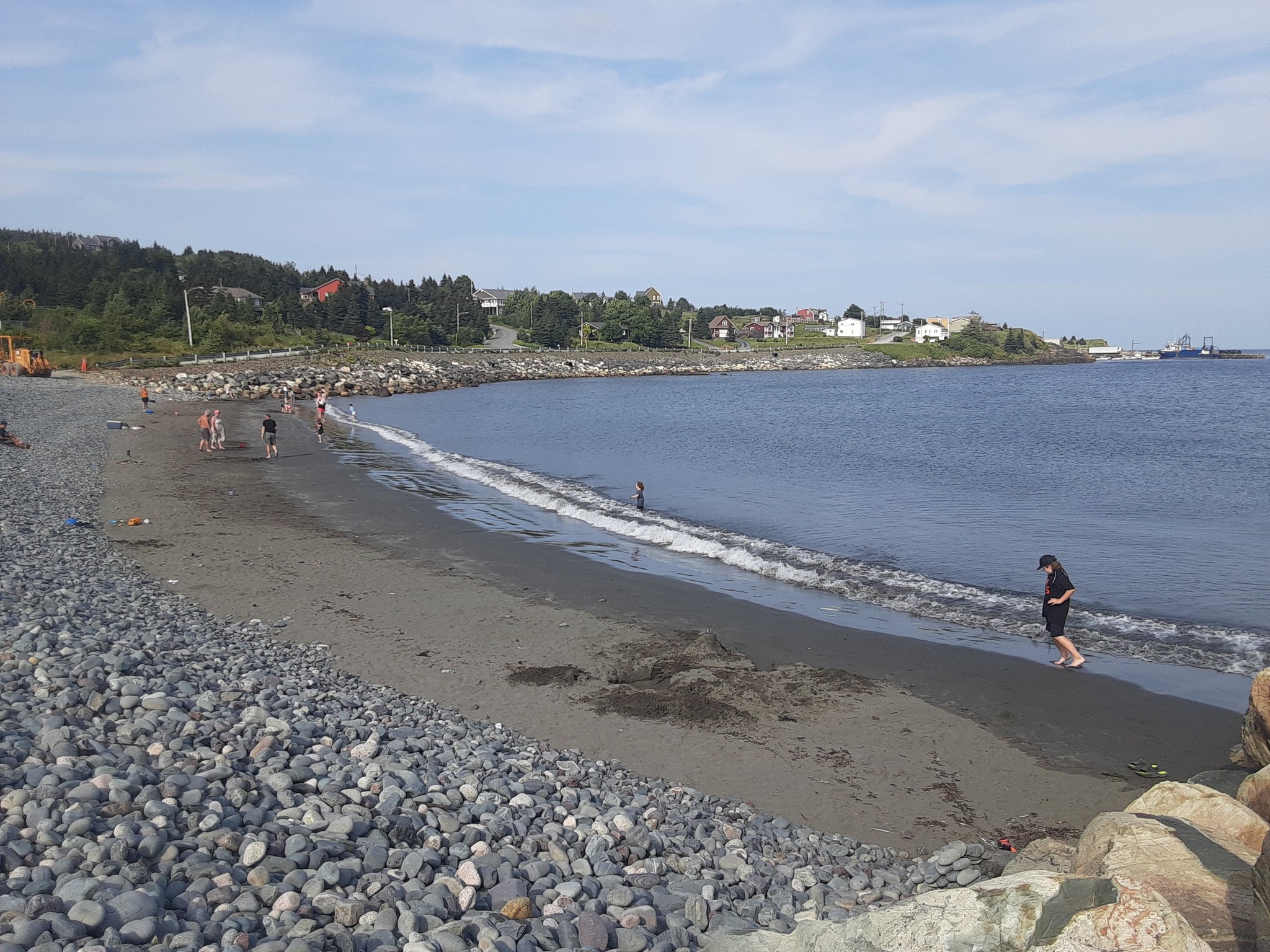
I was down to Witless Bay and Bay Bulls this week for a look around. My family used to spend summers in Bay Bulls. We rented a house from Con Aspell one summer and from the Lynches down on the north side for another summer. We also stayed one summer in a house near the church not far from Clem Maloney’s store. That store had the first Coke machine I ever saw.
Later our family shifted over to Witless Bay which is just the next town up the shore. Our extended family rented a property there that included an old house we knew as “The Alders”. It was a pretentious sounding way of naming our property which, by the way, had neither running water nor electricity but did have alder trees and a clear path to the ocean. The alders are still there. This was way back in the early 1960s. Now in that same area these days there is the retirement home. A new modern home now sits on the exact location where we used to stay. The land hasn’t changed. The shoreline is the same and the same still big rocks are there. This week I did note that the meadow I knew so well as a boy is all tore up by an ATV track.
In Witless Bay, summer fun included among other things cutting out tongues down at the Newfoundland Quick Freeze fish plant; catching tomcods or sculpins off the wharf; and wandering around the landwash. In case you didn’t know the landwash is that area between high tide and low tide on the beach. It was so interesting because it was filled with the flotsam of a whole ocean. You could find anything down at the landwash at low tide. Things from nearby harbours and things from halfway round the world. In the interest of full disclosure – now lest you get too wrapped up in a romantic notion of things washed ashore – the landwash was also a place where all the garbage was thrown. Mercifully that is no longer true but back in 1960 all our leftovers were hauled down to the landwash. We thought that the ocean could handle anything. We have found over the last half century that simply isn’t true. It is hoped that it wasn’t “a lesson too late in the learning.”
The landwash was a place to look for stuff and there was lots to find. There were old pieces of nets to be found there and old floats off cod-traps. Glass was used for some of those floats in those days. Sometimes cork was used because plastic was just arriving on the scene. It would arrive though and we would be the poorer for it. You know cork was great. You know for what? For making hockey pucks. We used to play hockey in the fish store where salt cod was cured. Up on the second floor you could find space for a hockey game with a hunk of cork shaped round for a puck. I have a clear memory of an early fall game when the wind was blowing hard and rain was landing loudly on the clapboards of the fish store where we played. It all felt so wonderful to be inside and dry. You could even pick away at a little piece of salted fish. It wasn’t great for your health but certainly did wonders for the soul. The fish store was a place of leisure and of safety and of refuge. It had an “other worldly quality” to it.
I was up to the Witless Bay plant last week. It is still a fish plant but now the stock in trade is shrimp or crab. It used to be cod with salted cod giving way to flash frozen fillets for the Boston market. I worked there for several summers on a skinning machine. I took cod fillets from the line and fed them into the skinning machine. It was no fun. I also worked on the boning line. Also, not much fun. What was fun was the landwash. There under rocks you could find mussels. You could find old longers, the cross pieces from fish stages washed away. There were all kinds of wood on the beach from God knows where. Not a lot of things came in tins in those days but there were lots of sturdy bottles. Lots of ointment jars and lemon crystal jars down at the landwash. Noxema had very durable glass containers.
What has changed now on the beaches? You probably can guess. It is the abundance of plastics, and it isn’t just bottles. Down near Marystown, a few years ago, I wandered a beach and what stood the most were all the used shotgun shells. Those shell cases were made of plastic and they never rot away. They are all over the place.
In Witless Bay the smell of the landwash has changed. It is still one-part Atlantic Ocean, but the other part is the left-over smell of a crab plant. It is not a bad smell, just not the same as a cod plant. Not worse nor better. Just different. No more smell of cod offal. No more smell of cod liver oil cooking. No more smell of salt fish drying in the sun. I loved those heady aromas of summer and fall. I do miss them but the landwash and all it holds is still there. It is glorious.
You can contact Jim Furlong at jfurlong@ntv.ca